Switch 2 Joy-Con Drift: Did Nintendo Finally Fix It? (10-Month Honest Verdict)
Quick verdict: No widespread Joy-Con drift has been reported after 10 months and 17 million units sold. Nintendo redesigned the sticks “from the ground up” — but confirmed they still use potentiometer-based sensors, not Hall effect or TMR tech. Early evidence is positive, but the design weakness that caused original Joy-Con drift still theoretically exists. Long-term verdict requires more time.
The original Joy-Con drift problem — context
Joy-Con drift became Nintendo’s biggest hardware scandal of the Switch era. The problem: the analog stick registers movement even when you are not touching it, causing characters to move uncontrollably in games. At its peak, 40% of Switch owners reported experiencing drift according to iFixit research. Nintendo faced class action lawsuits in the US, Canada, and several European countries. The company’s president publicly apologised and Nintendo set up a free repair programme.
The root cause was mechanical: Switch Joy-Con sticks use a potentiometer to detect stick position. A small plastic wiper slides across a resistive strip to measure voltage. As the plastic wears — or as dust and debris contaminate the contact surface — the readings become inaccurate. This is the same mechanism used in most gaming controllers across the industry, including PlayStation and Xbox.
What Nintendo changed in Joy-Con 2
Nintendo’s Switch 2 product developer Nate Bihldorff told Nintendo Life that Joy-Con 2 had been “redesigned from the ground up.” The most significant changes visible from teardowns and official information:
- Larger stick caps — the bigger physical surface distributes wear across a larger area, potentially slowing degradation
- Smoother, more durable stick housing material — Nintendo cited improved materials
- Tighter manufacturing tolerances — reduced dust ingress at the stick base
- Different plastic compounds for the wiper mechanism — exact details not publicly disclosed
- Magnetic attachment (not related to drift but eliminates rail wear issues)
The Hall effect sensor question — why Nintendo said no
Before Switch 2 launched, leaks strongly suggested Nintendo would use Hall effect sensors — a fundamentally different technology that uses magnetic fields instead of physical contact to detect stick position, eliminating the wear-based failure mode that causes drift. Nintendo confirmed in April 2025 that Hall effect sensors would NOT be used.
The reason, according to the iFixit teardown analysis: the Switch 2’s magnetic Joy-Con attachment mechanism uses strong magnets at the connection point. Hall effect sensors are themselves magnetic and would be interfered with by these attachment magnets, producing inaccurate readings. Tunneling Magnetoresistance (TMR) sensors — another drift-resistant technology less susceptible to magnetic interference — were also not used, a decision iFixit criticised given that third-party controllers like the 8BitDo Ultimate 2 ship with TMR sticks at lower price points.
The practical implication: Joy-Con 2 uses an improved version of the same fundamental technology that caused original Joy-Con drift, not a different technology.
Best Pokemon Games on Steam Deck 2026
The 10-month community report — what’s actually happening
Despite the underlying technology concern, real-world reports at 10 months are substantially better than Switch 1 at the same age. Screen Rant’s writer reported after months of personal use: “I’m especially relieved that my persistent Joy-Con stick drift issues have not carried over from the original system.” Multiple publications covering Switch 2 at 6 and 10 months have not flagged drift as an emerging issue.
TechRadar noted in their accessories coverage that Joy-Con 2 drift is not yet a widespread problem, though they recommended third-party controllers with drift-resistant sticks for users concerned about long-term reliability. The 8BitDo Ultimate 2 and GameSir alternatives with TMR sticks are specifically recommended for this reason.
The caveat: 10 months is not long enough for a definitive verdict. Original Switch 1 drift often took 1–2 years to manifest in heavy users. The true test of Joy-Con 2 reliability is a 2027 review, not a 2026 one.
What to do if your Switch 2 Joy-Con does start drifting
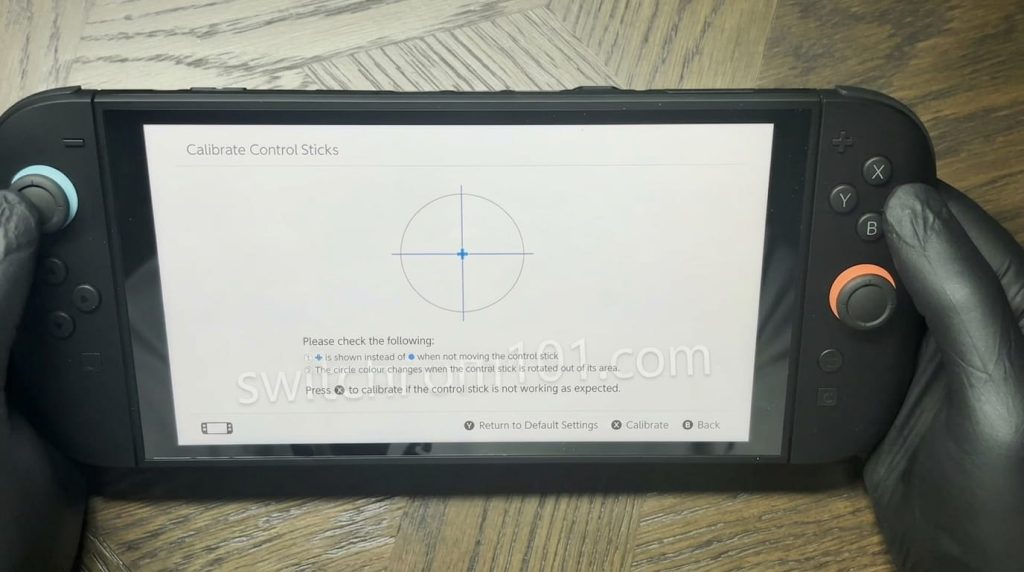
- Software fix first: Settings → Controllers and Sensors → Calibrate Control Sticks. Sometimes recalibration resolves minor drift without hardware changes.
- Stick dead zone: Some games have a dead zone setting in their own options. Widening the dead zone makes the game ignore small stick movements.
- Nintendo repair: Nintendo has repair programmes in most regions. Contact Nintendo Support for current options — the Switch 1 free repair programme set a precedent.
- Replacement Joy-Con: New Joy-Con 2 pairs cost approximately $79.99. Third-party options (8BitDo, GameSir) with TMR drift-resistant sticks are available at comparable or lower prices.
- DIY repair kits: Aftermarket joystick replacement kits exist, though Joy-Con 2 opening requires specialised tri-point screwdrivers and involves adhesive — the iFixit teardown rated the process as difficult.
Best drift-resistant third-party controllers for Switch 2
- 8BitDo Ultimate 2 — TMR drift-resistant sticks, RGB lighting, remappable buttons, USB-C charging dock. Widely reviewed as the best third-party alternative. No C button or amiibo scanning.
- 8BitDo Pro 3 — SNES-style aesthetic, TMR sticks, four programmable back buttons, $20–30 less than Nintendo’s Pro Controller 2.
- GameSir G7 Pro Wireless — another strong TMR option with good Switch 2 compatibility.

(GameOverlord) has been involved in Nintendo Switch emulation
since 2019. She owns two Nintendo Switch consoles and a Steam Deck OLED,
and has hands-on tested over 40 Switch titles across Ryujinx and
Sudachi emulators. Her background is in consumer electronics and
she has followed emulation law developments in the US, UK, and EU
since the Yuzu shutdown in 2024. SwitchROM101 was built to fill the
gap left by misleading ROM sites — giving gamers accurate, legal,
and technically correct information without hosting any game files.