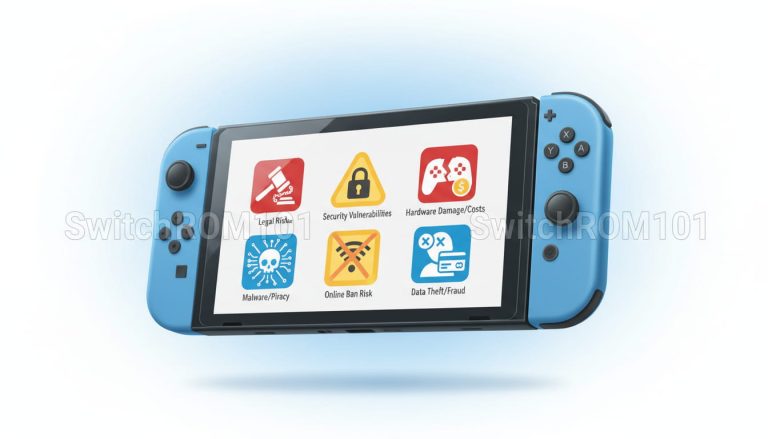
Is Downloading Switch ROMs Illegal? Laws, Risks & What Happens If You Do (2026)
Downloading copyrighted Switch ROMs without owning the original game is illegal in most countries, including the U.S., UK, and EU. Even sharing ROM files can violate copyright law. However, there are legal nuances around backups and emulation that many people misunderstand.
If you’ve ever searched anything about Switch ROMs, one question always comes up sooner or later: Are Switch ROMs legal or illegal?
You’ll find confident answers on both sides—some saying they’re fine, others warning they’re illegal. The truth sits in the middle, and it depends on how ROMs are obtained, how they’re used, and where you live.
This guide explains the situation clearly, without scare tactics or technical jargon, so you can understand what’s allowed, what’s risky, and what’s clearly not permitted.
Are Switch ROMs Legal or Illegal?
There is no universal yes-or-no answer.
Switch ROMs can be legal in very limited situations and illegal in many common ones. Most confusion comes from mixing up ownership, distribution, and system modification.
What the Law Actually Cares About
Copyright Is the Core Issue
Nintendo Switch games are protected by copyright law. That protection applies to:
- The game code
- Graphics and audio
- Distribution methods
A ROM is simply another form of the same copyrighted material.
Ownership vs Copying
Owning a physical cartridge or digital license does not automatically grant permission to copy or distribute the game freely. Copyright law focuses on reproduction and distribution, not just possession.
When Switch ROMs May Be Legal
Personal Backups (Very Limited Cases)
In some countries, making a personal backup of software you legally own may be allowed. This usually comes with strict conditions:
- The backup is for personal use only
- The original game is legally owned
- The backup is not shared
Even then, legality depends heavily on local laws.
Preservation and Research Contexts
ROMs are sometimes discussed in the context of:
- Game preservation
- Academic research
- Archival purposes
These uses may fall under exceptions in certain regions, but they are narrow and specific, not blanket permissions.
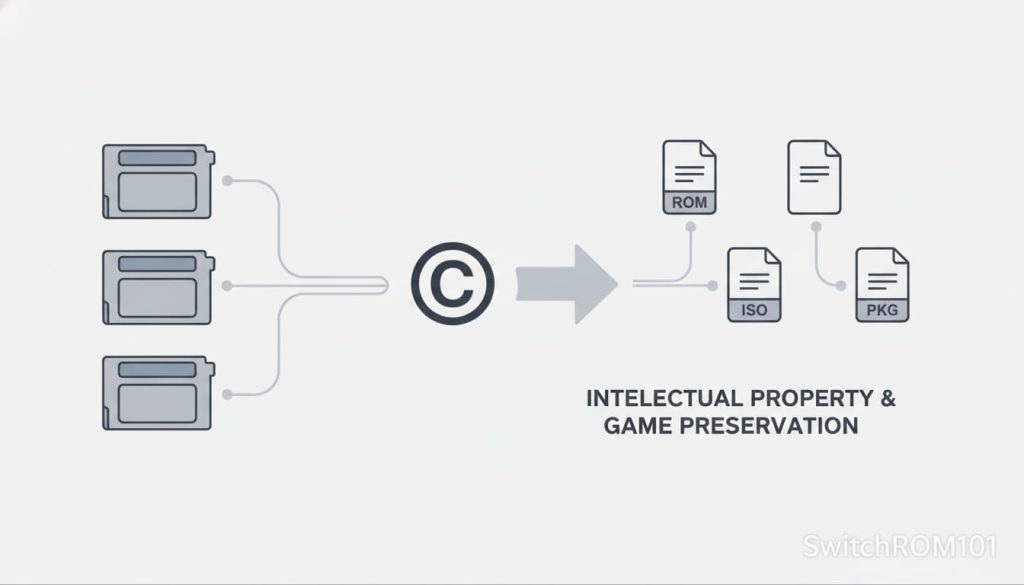
When Switch ROMs Are Clearly Illegal
Downloading ROMs You Don’t Own
Downloading a ROM of a game you haven’t purchased is almost universally illegal. It’s treated the same as downloading pirated software or media.
Sharing or Uploading ROMs
Distributing ROM files—whether for free or paid—is a clear violation of copyright law in most countries.
Circumventing Protection Systems
Many Switch games use encryption and security measures. Bypassing those protections can violate laws related to digital rights management, regardless of whether you own the game.
If you’re wondering whether jail time is realistic, see our detailed breakdown: Can You Go to Jail for Downloading Switch ROMs?
Legal Law vs Nintendo’s Terms of Service
Even Legal Doesn’t Mean Allowed
Something can be legal under national law but still violate Nintendo’s user agreement. Modifying hardware or running unofficial software typically breaks those terms.
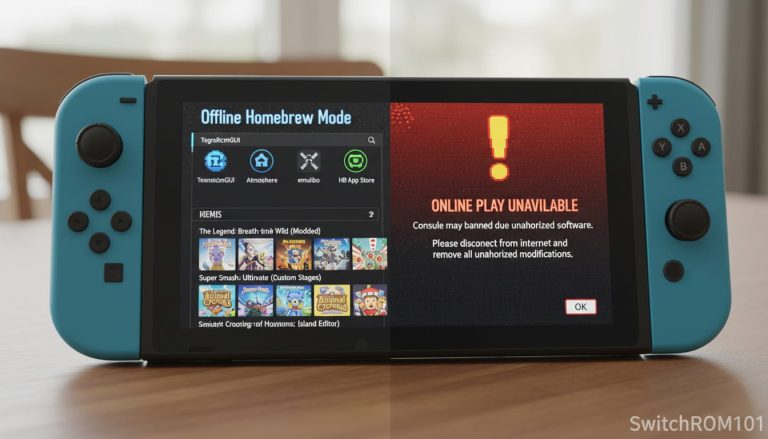
Consequences of Violating Terms
Users have reported:
- Online service bans
- Account restrictions
- Loss of access to digital purchases
These are company-level penalties, separate from legal consequences.
Why Laws Differ by Country
Regional Differences Matter
Copyright exceptions vary widely:
- Some countries allow private copies
- Others strictly forbid any duplication
- Some allow backups but prohibit breaking encryption
This is why advice from another country may not apply to you.
Why There’s So Much Confusion Online
Forum advice often mixes:
- Local laws
- Personal opinions
- Misunderstood legal terms
That’s why it’s important to be cautious with blanket claims.
Common Myths About Switch ROM Legality
“It’s Legal If I Own the Game”
Ownership alone doesn’t grant copying rights in many regions.
“ROMs Are Legal Because Emulators Are”
Emulators and ROMs are legally different. Emulators can be legal; ROMs are copyrighted game data.
H3: “Nintendo Doesn’t Care About Old Games”
Copyright protection does not expire just because a game is old or discontinued.
Practical, Real-World Perspective
From long-term community observation:
- Legal action usually targets distributors, not individual users
- Company bans are more common than lawsuits
- Risk increases significantly when files are shared or systems go online
That doesn’t make risky behavior legal—it just explains how enforcement often happens.
FAQ: Quick Answers About Switch ROM Legality
Are Switch ROMs always illegal?
No, but legal use cases are rare and highly restricted.
Is it illegal to dump a game I own?
It depends on your country’s laws and whether you bypass protection systems.
Can I get in trouble for downloading ROMs?
Yes. Downloading copyrighted games you don’t own is illegal in most regions.
Are emulators legal but ROMs illegal?
Often yes. Emulators can be legal; ROMs are copyrighted game files.
Can Nintendo ban my account for ROM use?
Yes, especially if the system connects online.
People Also Ask
Are Switch ROMs always illegal?
No. Legal use may exist in very limited cases depending on local law, but most common uses—such as downloading or sharing—are illegal.
Is it legal if I own the game cartridge?
Ownership alone does not automatically grant copying rights. Laws differ by country and may still prohibit duplication or protection circumvention.
Can Nintendo ban accounts for ROM use?
Yes. Even if something is legal locally, using unofficial files can violate Nintendo’s terms and lead to bans.
Are emulators legal but ROMs illegal?
Often yes. Emulators can be legal software, while ROMs are copyrighted game data.
Why is ROM legality so confusing?
Because copyright laws vary by country, and online discussions often mix legal facts with personal opinion.
So, are Switch ROMs legal or illegal?
They sit in a narrow legal gray area that depends on ownership, local laws, and how the files are used. In most everyday scenarios—especially downloading or sharing games—ROM use is illegal.
Understanding the difference between technical possibility and legal permission is essential before making any decisions.
Have you ever been confused by the legality of digital games or backups? Share your thoughts below, or explore our related guides to better understand how copyright law affects modern gaming.

(GameOverlord) has been involved in Nintendo Switch emulation
since 2019. She owns two Nintendo Switch consoles and a Steam Deck OLED,
and has hands-on tested over 40 Switch titles across Ryujinx and
Sudachi emulators. Her background is in consumer electronics and
she has followed emulation law developments in the US, UK, and EU
since the Yuzu shutdown in 2024. SwitchROM101 was built to fill the
gap left by misleading ROM sites — giving gamers accurate, legal,
and technically correct information without hosting any game files.