Why MIG Switch Causes Switch 2 Console Bans: The Technical Evidence (2026)
Confirmed: Nintendo began banning Switch 2 consoles using MIG Switch within 24 hours of MIG firmware 1.2.0’s release in June 2025. Error code 2124-4508 is the indicator. The ban is permanent and hardware-level. This article explains why this happens technically, what the evidence shows, and what the community learned.
What happened in June 2025 — the documented ban wave
On or around June 15, 2025, the MIG Switch team released firmware update 1.2.0, which added support for loading Switch 1 game backups on the Nintendo Switch 2 via backwards compatibility. Community forums celebrated the update as demonstrating MIG Switch’s compatibility with Nintendo’s new hardware.
Within 24 hours, ban reports began appearing. Nintendo Life published coverage noting Nintendo was “seemingly banning anyone found using the MIG Switch cartridge on its new hybrid system.” The bans manifested as error code 2124-4508 — Nintendo’s permanent online services ban error — with the accompanying message: “the use of online services has been restricted by Nintendo.”
Crucially, the bans were not limited to users playing pirated games. Twitter user SwitchTools, who covered Nintendo modding developments, reported: “My Switch 2 test has been banned, after using the MIG Switch with perfectly legal dumps of my own cartridges, so it would seem that Nintendo can detect something. Similar reports on Reddit are starting to come in.”
One user described a particularly ambiguous scenario: they inserted the MIG Switch briefly (without a game loading), the console attempted to download a title update, and the console was banned over a week later. The implication being that even a momentary connection while the MIG Switch was inserted created a detectable record.
The technical mechanism — how Nintendo detects MIG Switch
Cartridge certificate identification
Every genuine Nintendo Switch game cartridge contains a unique certificate — a cryptographic identifier that Nintendo’s servers can look up in their database of issued certificates. When a Switch goes online with a game inserted, this certificate is transmitted as part of the normal authentication process.
The MIG Switch flash cart uses a single certificate (its own device certificate) rather than the individual certificate of each game stored on its microSD. Nintendo’s servers compare received certificates against their database. A certificate that does not match a known legitimate game cartridge in Nintendo’s records, or one that matches a certificate that has appeared on an unusually large number of consoles, triggers a flag.
Tom’s Hardware explained the mechanism: “Each Switch cartridge carries a unique identifier. Nintendo has sophisticated systems in place to detect if multiple consoles share the same cartridge ID and flag this as piracy, leading to an account ban, a console ban, or, at worst, a bricked console.”
Public dump certificate pooling
When publicly-shared XCI dumps circulate online, thousands of users download and run the same dump file — including the same cartridge certificate embedded in it. Nintendo’s servers detect the same certificate appearing across thousands of different consoles simultaneously. This is the clearest possible piracy signal and triggers bans reliably.
This explains why users who claimed to use only their own private dumps received bans in some cases: if the dump they created had any characteristics that overlapped with widely-distributed public dumps — certificate format, game version, region code — the detection system may have still flagged it.
NAND logging and delayed bans
Switch consoles maintain internal logs in NAND storage recording hardware interactions, certificate accesses, and network activity. These logs are written when MIG Switch is inserted, regardless of whether the console is online at that moment. The log entries persist through factory resets and console formatting.
This creates the delayed ban pattern: a user inserts MIG Switch while offline, uses it for an extended period with no issues, then eventually connects online for an unrelated purpose (downloading a game update, accessing eShop, using GameChat), and receives the ban error at that point. The connection triggers Nintendo’s servers to check the accumulated NAND log data and apply the ban.
From the GBAtemp community thread “Mig & Switch 2, let’s figure it out”: “Ban might not happen immediately. Staying offline only prolongs the inevitable as it’s not possible to clear the logs that Nintendo checks for any suspicious activity on your console.”
Switch 2-specific detection improvements
Nintendo appears to have updated its server-side detection systems alongside Switch 2’s launch. The same MIG Switch usage patterns that some users reported as safe on original Switch hardware triggered faster and more consistent bans on Switch 2. The combination of updated detection logic, Switch 2 Edition upgrade authentication requirements (which force online connections), and the certificate mechanism described above makes Switch 2 materially higher risk than original Switch hardware.
How to emulate motion controls on citra
What kind of mig switch switch 2 ban is it? Account vs console
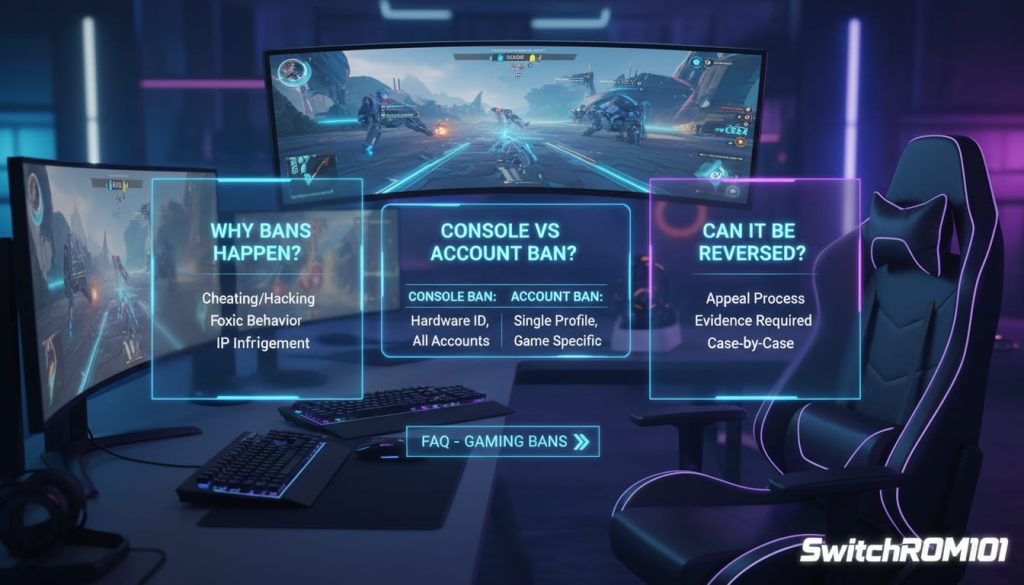
The bans documented in the June 2025 wave were console bans, not account bans. Nintendo’s enforcement focused on the hardware unit rather than the Nintendo Account associated with it. This means:
- The banned console cannot access Nintendo Online Services, eShop, or Nintendo Switch Online
- The Nintendo Account is unaffected — the user’s game library, save data in the cloud, and online access on other hardware remain intact
- Purchasing a new Switch 2 console and signing in with the same Nintendo Account restores full functionality
This is consistent with Nintendo’s historical approach: console-level bans are a technical enforcement tool, while Nintendo Account terminations require a higher bar of documented violation.
Community evidence and outcomes about mig switch switch 2 ban— what the data shows
Based on GBAtemp community threads from June 2025 through March 2026:
- Users who kept Switch 2 strictly offline and used only private dumps from their own cartridges reported no bans over extended periods (months)
- Users who went online after MIG Switch use — even briefly, even for updates unrelated to backups — reported ban rates ranging from immediate to delayed by weeks
- No confirmed method exists to clear the NAND detection logs that Nintendo checks during online connections
- The ban is permanent and not reversible through Nintendo support in the cases documented
- The MIG Switch team’s own community posts recommend keeping Switch 2 offline when using the device
Frequently asked questions
Why does MIG Switch get Switch 2 banned but not Switch 1 in many cases?
Nintendo updated its server-side detection systems for Switch 2’s launch. Switch 2 also requires more frequent online connections for Switch 2 Edition game authentication, providing more opportunities for detection. The underlying mechanism is the same but the detection is more responsive.
Can I get un-banned after a mig switch switch 2 ban?
Console bans appear to be permanent based on community reports. Nintendo support has not reversed these bans in documented cases. The Nintendo Account associated with the console is unaffected and works on other hardware.
What is error code 2124-4508?
Nintendo’s permanent console ban error. It indicates the console has been permanently restricted from Nintendo Online Services due to a breach of user agreements. The error appears when a banned console attempts to connect to any Nintendo online service.
Did Nintendo respond officially to MIG Switch ban reports?
Nintendo has not made public statements specifically addressing MIG Switch bans. Their enforcement actions speak for themselves, and their terms of service prohibit the use of any unauthorised devices that interact with Nintendo’s software or hardware.
Quick Answers
Can Nintendo ban a Switch 2 console? Yes. Console bans can occur when online checks identify policy violations or unauthorized system changes.
What triggers bans most often? Connecting to online services on modified systems, using unauthorized game files, and running unapproved software while online.
What’s the lowest-risk approach? Keep modified activity offline, avoid unauthorized downloads, and don’t mix modding with online accounts/services.
People Also Ask
Does Switch 2 ban the console or the account?
Both can happen. Console bans limit the device, while account bans limit a user’s Nintendo account access.
Can a console ban be reversed?
Sometimes appeals are possible, but outcomes depend on policy and evidence. Avoiding violations is the only reliable approach.
Is it safer to use offline only?
Offline-only use generally reduces risk because most enforcement relies on online checks and telemetry.
What’s the safest content to publish about this topic?
Educational, risk-aware guides focusing on legality, safety, and general concepts—not instructions to bypass security.
What should I do if Search Console flags this page?
Keep content policy-safe, avoid enabling steps for misuse, and focus on legality, warnings, and general explanations.

(GameOverlord) has been involved in Nintendo Switch emulation
since 2019. She owns two Nintendo Switch consoles and a Steam Deck OLED,
and has hands-on tested over 40 Switch titles across Ryujinx and
Sudachi emulators. Her background is in consumer electronics and
she has followed emulation law developments in the US, UK, and EU
since the Yuzu shutdown in 2024. SwitchROM101 was built to fill the
gap left by misleading ROM sites — giving gamers accurate, legal,
and technically correct information without hosting any game files.